
Meter set maintenance is routine work, but every shutoff it causes carries a cost: relights, return visits, customer calls, and lost crew time. The utilities that keep outages low don’t do less maintenance. They plan it and equip their crews so the customer barely notices the work.
Here are five ways to get there.
1. Change Meter Valves Under Pressure
A leaking or seized meter valve usually means blowing gas, setting up a safety zone, and sometimes a full service renewal. A valve changer avoids all of that.
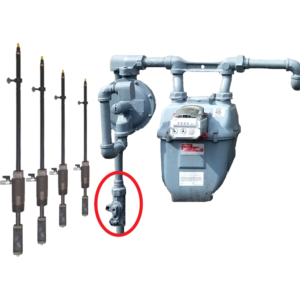
The Mazco Valve Changer inserts a stopper into the riser below the valve, so the old valve comes out and the new one goes in without releasing gas. It works on steel and anodeless PE risers and service head adapters, with most 1/2″ to 2″ rectangular port or ball meter valves operating up to 100 psi. The job takes four steps:
- Remove the piping and check the valve passage with a sight glass.
- Attach the Valve Changer and insert the stopper below the valve.
- Remove the old valve.
- Install the new valve.
No blown gas, no service renewal, and the customer is back in service quickly. See the Mazco Valve Changer.
2. Inspect the Whole Meter Set on Every Visit
If a crew is already on site for a meter change, it costs very little to check the rest of the set: the riser, the regulator and vent, the valve, and the fittings. Catching a corroded riser or a stiff valve now prevents an unplanned outage later.
A short written checklist keeps inspections consistent from crew to crew.
3. Stock Trucks for the Job, Not the Average Job
Return trips usually happen because the right fitting or tool wasn’t on the truck. Review your most common meter set repairs and stock trucks for them, including the less common sizes.
Two items to cover are:
- Valve changer stoppers sized for your risers. Mazco offers stopping units from 16 in (40 cm) to 6 ft (1.8 m), plus O-ring style stoppers for extra-small valve openings.
- A Safe-T-Stopper for stopping off service tees during tee repairs and service renewals, so crews aren’t waiting on line-stopper equipment.
4. Plan Outages When You Can’t Avoid Them
Some work does require a shutoff. When it does, notify the customer in advance, schedule around their occupancy, and make sure someone will be there for relights. A planned two-hour outage generates far fewer complaints than a surprise one.
Track which outages were planned and which weren’t. The unplanned ones show you where better tooling or procedures would pay off.
5. Train Crews on Gas-Free Procedures
A tool is only as good as the crew using it. Build gas-free valve replacement into your written operating procedures and train every crew on them, not just your most experienced techs.
Hands-on demos work best. Crews trust a tool once they’ve used it on a live set.
The Bottom Line
Fewer shutoffs mean fewer relights, fewer return trips, and fewer customer complaints. Most of those gains come from three things: changing valves under pressure, inspecting the full set on every visit, and making sure crews have the right tools on the truck.
Get the Right Tools for Your Crews
Mazco designs and manufactures specialized tooling for gas utility crews across North America. To price tooling or schedule a field demo, request a quote. Canadian customers can reach our exclusive distributor, CR Wall & Co. Inc.
Request a quote
To price the Meter Valve Changer or set up a field demo for your crews, request a quote and we’ll respond within one business day.